
Run Your Own Labs
Mar 26, 2026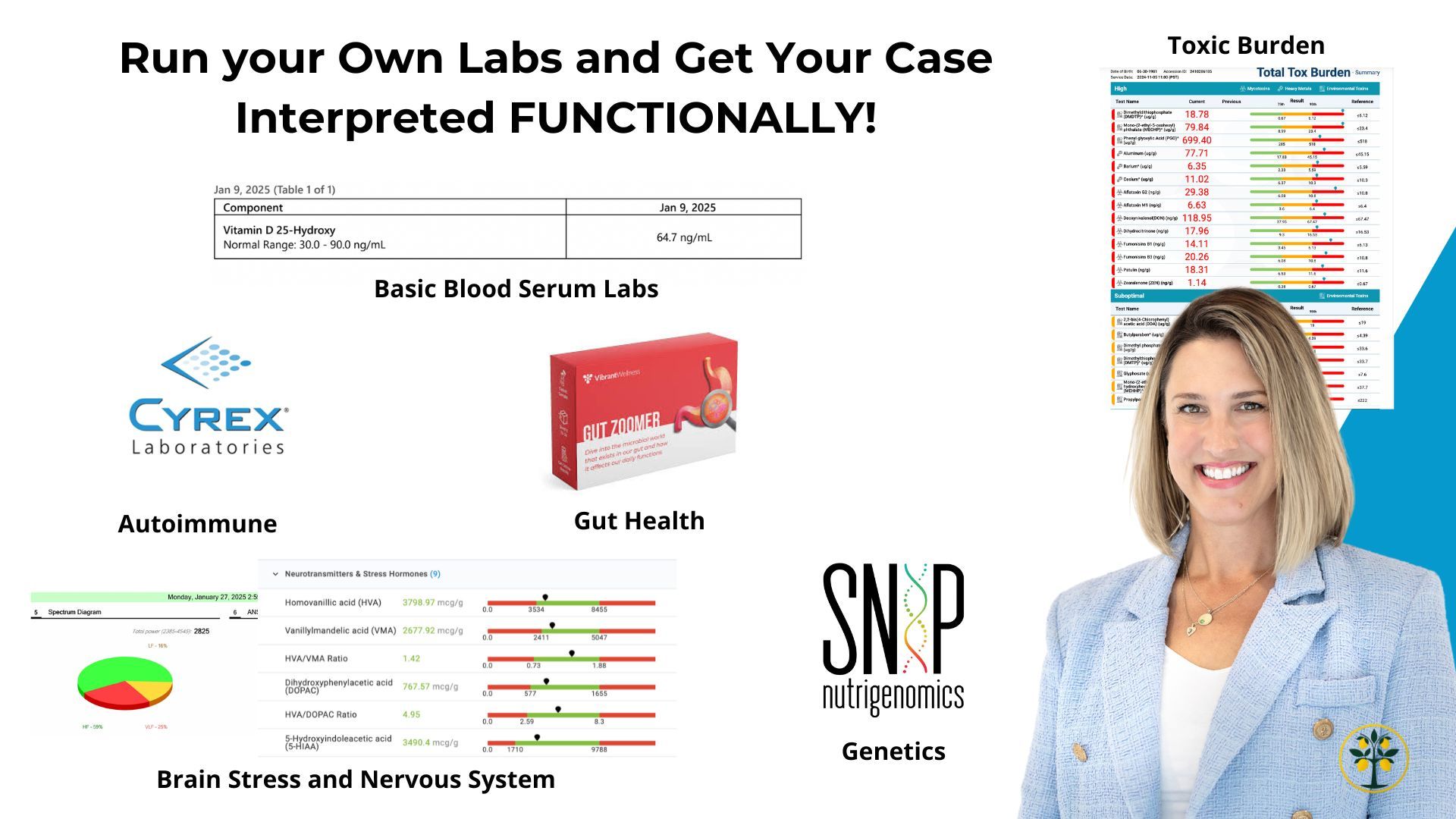
How to Become a Savvy Consumer of Functional Testing (and Stop Guessing Your Health)
If you’ve ever been told “your labs look normal” while still dealing with bloating, brain fog, fatigue, or mood swings, you’re not alone. The reality is that conventional lab ranges are based on population averages, and when a majority of the population is already dealing with at least one chronic condition, “normal” doesn’t always mean optimal. This is where functional lab testing comes in. Instead of waiting for disease, functional testing helps you understand what’s happening beneath the surface so you can take proactive, personalized steps toward better health. The goal isn’t more data, it’s better data, interpreted through a lens that prioritizes root cause, not symptom management.
When you register for the lab list below, we'll share a video training that breaks down which labs are actually worth your time and investment, and which ones often create more confusion than clarity. High-value testing includes foundational blood chemistry (reviewed through functional ranges), genetic testing, microbiome stool testing, and comprehensive toxin panels. These provide actionable insights into gut health, detox capacity, inflammation, and your body’s unique blueprint. On the other hand, commonly marketed tests like salivary cortisol, food sensitivity panels (IgG), hair tissue mineral analysis (HTMA), and some micronutrient tests often lack consistency, reliability, or meaningful clinical application. The takeaway: testing should guide decisions, not overwhelm you or send you down unnecessary rabbit holes.
When used correctly, labs become a powerful tool to connect symptoms to systems. Whether it’s uncovering gut imbalances behind food reactions, identifying toxin burden contributing to fatigue, or spotting subtle patterns in standard blood work (like albumin, basophils, or HDL trends), the right data helps you move from guessing to strategy. And the best part? You don’t need to wait for permission to be proactive. With the right guidance, you can access and understand your labs in a way that actually moves your health forward.
TL;DR
- “Normal” labs don’t always mean optimal health
- Functional testing focuses on root cause, not just disease
- Best labs to consider: blood chemistry (functional ranges), genetics, gut testing, toxin panels
- Skip or be cautious with: food sensitivity tests (IgG), salivary cortisol, HTMA, Viome Stool Test
- The goal is targeted, actionable insight, not more overwhelm
Download Your Free Lab List
Want to know exactly which labs to run (and in what order) to uncover root causes?
👉 Download The Lab List — this is your step-by-step functional testing guide to the most valuable functional labs for gut health, energy, hormones, and detox support.
This is the same framework used inside my practice to help clients stop guessing and start making strategic, personalized decisions about their health.